
Guides

Illustrated guides to AI coding agents, agent frameworks, cloud platforms for agents, and the engineering ideas behind them.

A desk with a laptop and a robot assistant, and a path of glowing stepping stones across a misty landscape

Coding agents, day by day

Guides for the coding agents developers use every day. The six Day-to-Day guides (Claude Code, Cursor, OpenAI Codex, GitHub Copilot, OpenCode, and Pi) build one running example, Ticket Triage, a small Node.js service that sorts support tickets. The public Ticket Triage repository has a branch for each guide and a tag for every day, so you can catch up on any day.

Claude Code, Day-to-Day (second edition)

A 28-day guide for developers who are new to Claude Code. You build one small project at 20 to 40 minutes a day, and each Start here lesson ends in a result you can check. You set permissions, write a skill and a hook, connect an MCP server, run sessions in worktrees, and run claude -p from a script as a test gate.

What sets it apart: Start here steps ran live on macOS in auto mode and Manual mode, pinned to Claude Code 2.1.326 and 2.1.327.

28 parts Open the guide

First edition

Claude Code Away from the Terminal

A seven-part series on running Claude Code when you are away from the desk. It covers Channels, Remote Control, Dispatch, Routines, and scheduled tasks, including the two local schedulers and when to use each. A final part shows one developer using all five.

What sets it apart: Part 1 compares the five trigger surfaces in one table: what triggers Claude, where it runs, and whether your machine must stay on.

7 parts Open the guide

Cursor, Day-to-Day

An 18-day guide for developers who have used Cursor for completions or chat but never run its agent day to day. Each day takes 20 to 40 minutes and ends in a result you can check. You keep rules in AGENTS.md, block a command with a hook, hand a task to a Cloud Agent, let Bugbot review a pull request, and run the agent headless in GitHub Actions.

What sets it apart: CLI steps ran live on Cursor CLI 2026.11.13-eacade1, plus the key editor steps in Cursor 3.30.14 with saved screenshots.

18 parts Open the guide
OpenAI Codex, Day-to-Day

A 17-day guide to Codex in the terminal and the ChatGPT desktop app. You need Node.js 22 or later, Git, and a ChatGPT Plus or higher account. You make a first safe change, run sandbox probes, put a rule in AGENTS.md, turn a check into a skill, split work across worktrees, and hand a task to the cloud.

What sets it apart: Start here steps ran live on a pinned Codex CLI 0.169.0, and Day 15 cloud results with no command trace are labeled Cloud-reported.

17 parts Open the guide
GitHub Copilot, Day-to-Day

A 16-day guide for developers who already have GitHub Copilot, usually through work, and mostly use completions. You install Copilot CLI, make it refuse git push, cap a session's credits, hand an issue to the cloud agent, and write a read-only Agentic Workflow. It is a preview written November 16, 2026, before Microsoft Ignite, with an update planned for November 21, 2026.

What sets it apart: Version and skill checks ran live on Copilot CLI 1.0.112, and every step that was not run says so.

16 parts Open the guide

OpenCode, Day-to-Day

A 17-day guide to OpenCode, the open-source coding agent, for developers who have used a coding agent such as Claude Code. You write permission rules that refuse a git push, hand a review to a read-only reviewer subagent, and connect an MCP server and prove the agent called it. You also write a guard plugin that refuses agent edits to package.json.

What sets it apart: Start here steps ran live on OpenCode 2.3.0 with google/gemini-4-hydrogen, and the Day 2 to 4 TUI steps were driven in tmux.

17 parts Open the guide

Pi, Day to Day

A 12-day guide to Pi, the terminal coding agent, for developers who already use Claude Code. You install Pi and confirm which copy your shell runs, steer a run, and branch two approaches with /clone. You also write a guard.ts extension that blocks one command and run Pi inside Docker Sandboxes.

What sets it apart: Pi 1.5.2 tests ran as one chain across all 12 days, each day starting from the real end state of the day before.

12 parts Open the guide
Getting Real Work Done with Claude Cowork

A 12-part guide to handing real tasks to Claude Cowork and getting finished work back, safely and repeatably. It covers what Cowork can touch, reusable tasks, recurring routines, living dashboards, work started from your phone, and rollout to a whole team. You need a paid Claude plan and the Claude Desktop app on macOS or Windows.

What sets it apart: One competitive-intelligence workflow runs through all 12 parts, from a one-off competitor brief to a scheduled weekly report and a live dashboard.

12 parts Open the guide

Glowing modular blocks and gears joined into one loop on a workbench

Building agents: frameworks and SDKs

Guides for building your own agents in code, one framework or SDK per guide. Most start from the agent loop and work toward tools, memory, permissions, and deployment. The Langfuse guide adds tracing and evaluation for the agents you build.

Building with the Claude API

Building with the Claude API teaches the single HTTP call behind every chatbot, agent, and LLM feature. Across eleven parts you cover the request and response model, conversation memory, streaming, the tool-use loop, structured JSON output, prompt caching, cost estimation, the batch API, rate limits, and logging.

What sets it apart: One customer-support triage service, which classifies inbound support email, grows across all eleven parts.

11 parts Open the guide

Building with the Claude Agent SDK

This guide walks from your first Claude Agent SDK run to production. It explains the agent loop that the SDK runs for you, then builds out custom tools, project context, streaming output, subagents, skills, plugins, and deployment.

What sets it apart: A code-maintenance agent that fixes bugs in a small buggy-shop repo runs through all 14 parts.

14 parts Open the guide

Building with Claude Managed Agents

Claude Managed Agents hands work to an agent that Anthropic runs for you and returns a finished task. Across thirteen parts you go from your first managed agent to a deep research agent, covering the event stream, custom tools, permissions, MCP, skills, memory, parallel agent teams, multi-user isolation, and deployment.

What sets it apart: Parts 1 to 12 grow one invoice-reconciliation agent, and Part 13 composes every primitive into a deep research agent.

13 parts Open the guide

Building with CrewAI

Building with CrewAI shows how to assemble agents into crews that do real work, then govern them. Across eleven parts you go from an agent's role, goal, and backstory to crews and flows, tools, memory versus knowledge, permissions, scaling a crew, runtime hooks, and shipping past your laptop.

What sets it apart: Full source for 20 code listings across the 11 parts, built around one crew that fixes the buggy-shop repo.

11 parts Open the guide

Building with Google's Agent Development Kit (ADK)

ADK is Google's agent loop, and this guide builds production agents on top of it. Across eleven parts you cover tool descriptions, multi-agent teams, session state and memory, streaming, long-running execution, stateful deployment, and catching silent regressions.

What sets it apart: Covers ADK's six callback points, and Part 7 uses one to block a forbidden instruction before it reaches the model.

11 parts Open the guide

Building with LangChain Deep Agents

LangChain Deep Agents turns the agent loop, the filesystem, the tools, and the guardrails into a library you configure. Across thirteen parts you move from the loop and the agent's filesystem to permissions, undo, on-demand skills, governance, long-running deployment, and the silent failures that end a launch.

What sets it apart: Part 12 maps the five patterns from Anthropic's "Building Effective Agents" to Deep Agents code and to the Claude Agent SDK.

13 parts Open the guide

Building with Microsoft Agent Framework

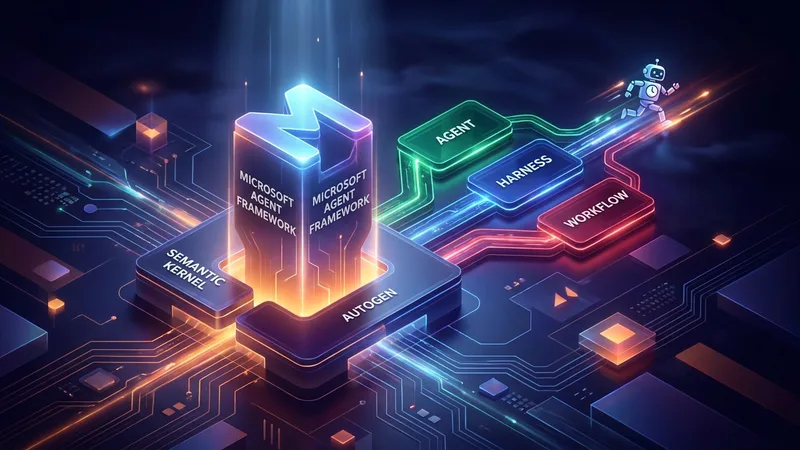
Microsoft Agent Framework is the successor to Semantic Kernel and AutoGen, built by the same teams. The guide covers its three layers: agents, a harness for long multi-step tasks, and graph-based workflows with checkpointing and human-in-the-loop support. Code is shown in both C# and Python.

What sets it apart: One market-research agent grows across all 14 parts, with full source for 49 listings in Python and C#.

14 parts Open the guide

Building with Langfuse

Langfuse is an open-source platform for observability, prompt management, evaluation, and metrics, in Cloud or self-hosted. The guide builds Harbor Desk, a support-ticket assistant that classifies a ticket, retrieves a policy snippet, and drafts a reply. It starts with one import change and one traced call, then adds nested traces, agent frameworks, judges, and experiments.

What sets it apart: Part 5 traces the same Harbor Desk ticket through the Claude Agent SDK and Deep Agents, with full source for each.

11 parts Open the guide
A glowing agent loop placed inside a large cloud data center

Deploying agents to the cloud

Guides for running an agent on a hyperscaler. Each one keeps your agent loop and adds the platform's hosting, memory, identity, and observability around it.

Harness Engineering on the AWS AgentCore Hyperscaler

You keep your agent loop in the Claude Agent SDK or LangChain Deep Agents, and Amazon Bedrock AgentCore supplies Runtime, Memory, Gateway, Code Interpreter, Browser, Identity, Observability, and Evaluations around it. The series checks AgentCore against the seven harness components and marks each one covered, partial, or untouched. One market-intelligence agent grows across the parts, from a first hosted loop to deployment and hardening.

What sets it apart: Wires each AgentCore service into both the Claude Agent SDK and Deep Agents, with 22 extracted Python listings.

12 parts Open the guide

Azure Microsoft Foundry: Deploy your Harness to the Hyperscaler Control Plane

You take one agent, a research desk that serves many analysts, from a laptop loop to a governed, observable, multi-tenant fleet on Microsoft Foundry. The loop stays yours, and Foundry supplies hosted compute, a governed tool registry, managed state and memory, agent identity, guardrails, tracing, evaluation, and a fleet control plane. Each platform part shows both the Microsoft Agent Framework wiring and the LangGraph or Deep Agents wiring.

What sets it apart: Ships 59 extracted listings in Python, YAML, Bicep, KQL, shell, and HTTP across 16 parts and two appendices.

17 parts Open the guide

Older edition

Concentric loops of light around a central core

Concepts

Guides on the ideas behind reliable agents: the harness around the model, the loop that the agent runs, and a factory of loops that ships software.

Harness Engineering, Two Frameworks

The series names the jobs an agent harness does that the model cannot, and shows the failure each one controls. Part 1 builds a naked agent with no memory, validation, or recovery, and each later part closes one gap, from tool contracts to observability. You see each job in the Claude Agent SDK and in LangChain Deep Agents.

What sets it apart: Builds every harness function twice, in the Claude Agent SDK and in Deep Agents, with 31 extracted Python listings.

8 parts Open the guide

Loop Engineering

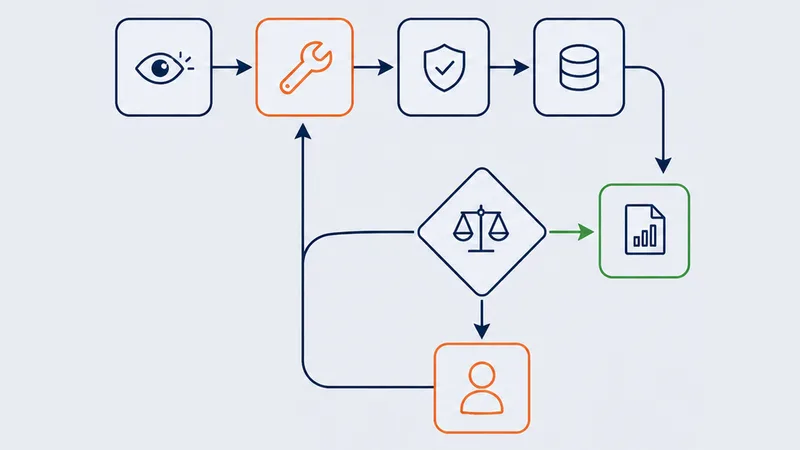
Loop engineering is the design of the cycle an agent runs, and of who may stop it. The first article works through a ticket enhancer, ported to the Claude Agent SDK, that turns a vague GitHub issue into a rubric-ready ticket. It covers five nodes (trigger, action, verify, memory, exit), bounded authority, computed exits, and interactive rubric and stop-condition explorers.

What sets it apart: The stop decision lives in check_stop.py, never in the model, and a ticket is released only on an exact LGTM comment.

1 article Open the guide

AI Software Factory Series

Code generation got cheap, and verification did not. The series sets out a reference design for an AI software factory: ten stages from Shape to Improve, each a loop with a trigger, an independent check, memory, and a stop condition. It argues for a light factory, where people keep the approval gates and agents do the work between them.

What sets it apart: Follows one fictional workspace export feature through the stages, from Shape and Plan through Build and Review.

17 parts Open the guide